
The Beginning
Long before form & eisen became a design studio, its origins were already taking shape.
The story begins in Lofer, a small village in the Austrian Alps, where the Weißbacher family has lived and worked for centuries. Since the 15th century, craftsmanship has been part of everyday life. What started as a traditional forge gradually evolved through generations of makers, each leaving behind their own knowledge, skills, and dedication to the craft.
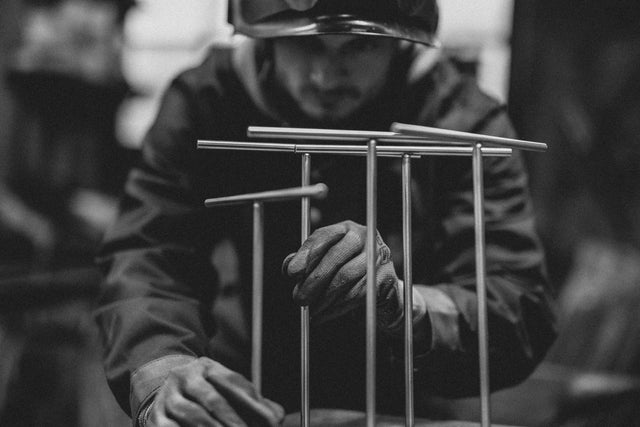
Over time, the workshop became a place where more than forged steel was created. Agricultural tools, machinery, motorcycles, and custom-built equipment were developed and manufactured, always driven by precision and the desire to create objects that would endure. One remarkable example remains in use today: a pillar drill designed and built by Simon's great-uncle, a machine that even served during the Second World War and continues to be part of the workshop where form & eisen pieces are made.
In the 1950s, Simon's grandfather established an artistic blacksmith workshop, bringing together traditional craftsmanship and sculptural metalwork. His father later continued this legacy, developing his own approach to metal sculpture and architectural metalwork. Growing up surrounded by this environment, Simon experienced from an early age that making was never simply about producing objects—it was about understanding material, respecting the process, and pursuing quality without compromise.
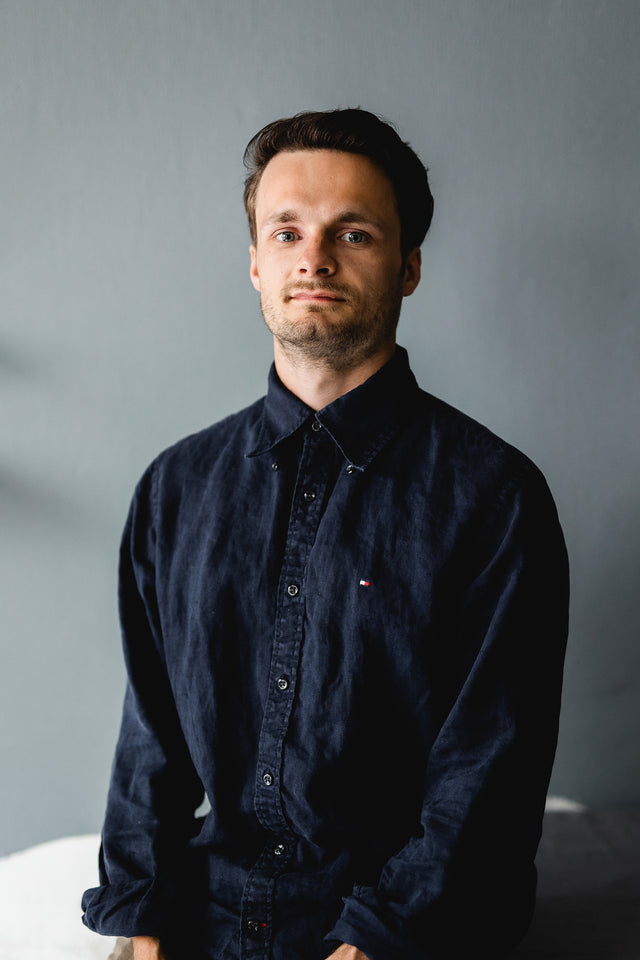
The origins reach even further back, deeply rooted in the artisanal tradition of Simon Weißbacher, who is formally trained as a metal construction technician.
Growing up within a family shaped by craftsmanship, his early connection to material, process, and precision became the foundation of his design philosophy. Long before form & eisen existed as a brand, the principles of making, patience, and respect for material were already part of his everyday life.
After completing his apprenticeship, Simon spent several years working in architectural metal fabrication, producing staircases, doors, railings, and structural elements. While these years refined his technical skills, they also revealed a growing desire to create work of his own—objects that were not only functional, but carried a clear design language and lasting presence.
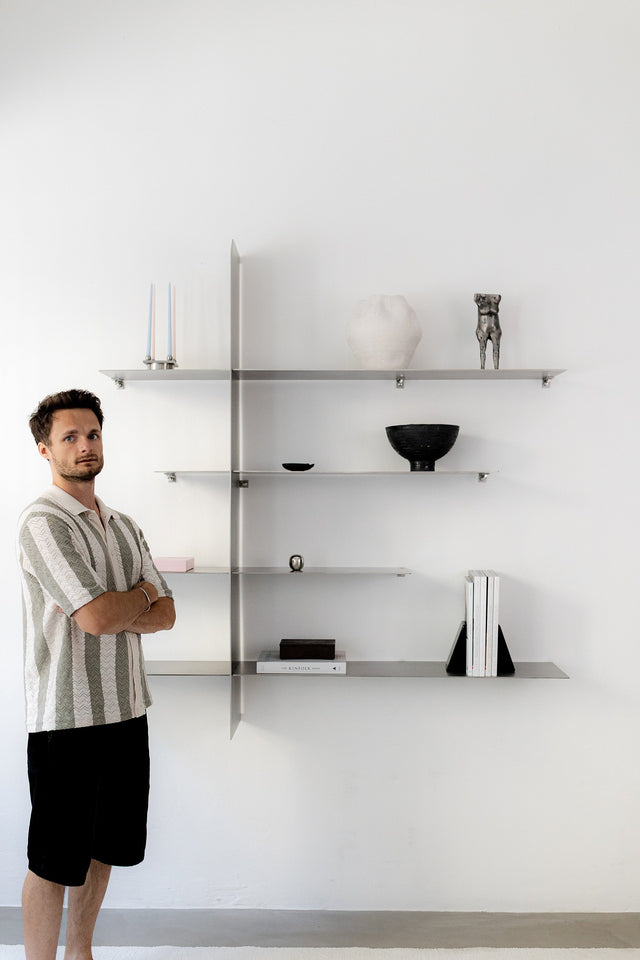
In 2021, Simon founded form & eisen as an independent studio. What began alongside traditional metalwork gradually evolved into a dedicated design practice, where industrial functionality, sculptural form, and simplicity became the defining principles of every object.
Today, every piece is still handcrafted in the same region where this story began centuries ago.